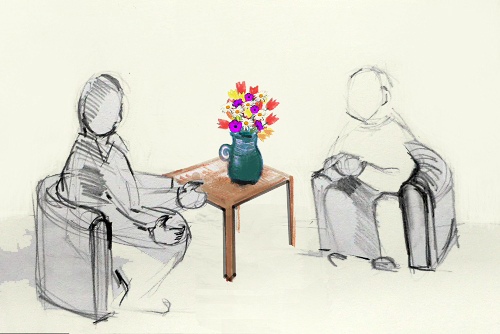
Therapy is based on the principles of the model of relational family psychotherapy, which was developed by dr. Christian Gostečnik, Ph.D.
An individual is born into a certain family (system). This system consists of parents (or other primary caregivers), and a child or children. In every system, certain connections and ties are formed, the family atmosphere creates certain affects, defence mechanisms or constructs; and specific boundaries, demarcations, roles, and structures are established. Just as the system has a certain influence on the individual, so the individual also has a certain influence on the system.
When two individuals fall in love and start building a new relationship (on the interpersonal level), they each bring with them their own patterns, behaviours, the whole blueprint … from their families of origin. There would be no attraction between them if there were no unconscious reciprocity. And these two individuals then re-create a new family into which they bring unconscious dynamics from their original families – the intrapsychic worlds.
Relational family psychotherapy, which perceives the individual in the context of the family in which they grew up, resolves and addresses all three levels in the individual – systemic, interpersonal and intrapsychic. Clinical work, and especially the relationship with the therapist, is based on a profound transformation of intergenerational emotional patterns and intimate relationships.